
Reviewed · OLD DUBAI AND SOUKS
Historic Forts, Boats and Pearls of Old Dubai Walking Tour
Dubai’s modern skyline tells only the newest chapter of the city’s story. This two-hour walk takes you into Al Bastakiya and Al Fahidi, where wind towers, heritage houses, museums, and narrow lanes show what Dubai looked like before its towers and motorways.
I like the abra ride across Dubai Creek, a short crossing that puts the old trading port in view. I also like the way the tour links the textile, spice, and gold souks with stories about food, customs, pearl trading, and daily life. The main drawback is its pace: two hours is enough for a strong introduction, but not enough for long shopping stops or a slow look at every museum.
Key points before you book
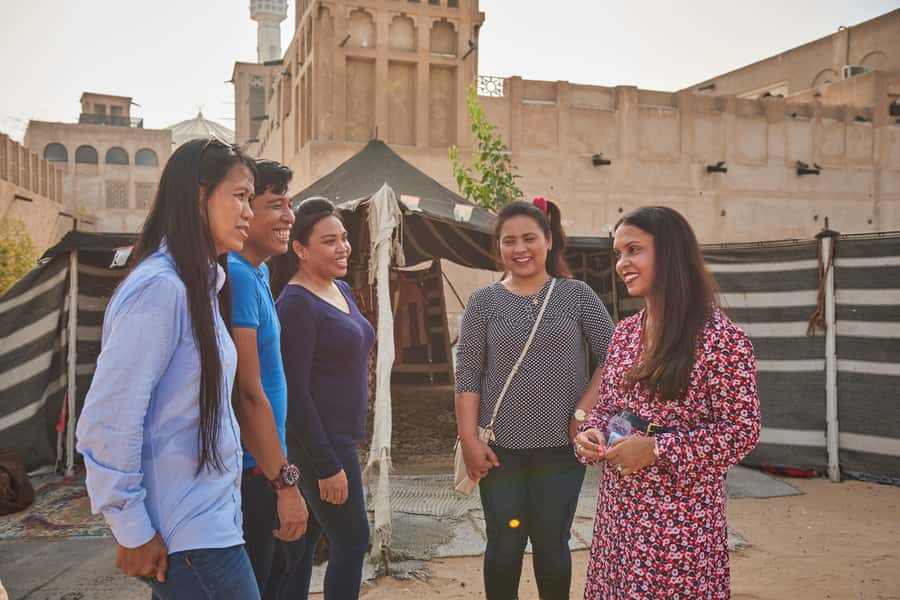
- Al Bastakiya and Al Fahidi: Walk through Dubai’s oldest residential quarter and see restored heritage houses with traditional wind towers.
- Three major souks: Visit the textile, spice, and gold markets, with extra attention to local customs and shopping etiquette.
- A traditional abra crossing: Ride a wooden boat across Dubai Creek instead of seeing the water only from the shore.
- Food and spice tastings: Try Arabic coffee and dates, then sample chocolates and dried fruits in the spice souk.
- A history-led introduction: Learn how a desert trading town grew through pearl trading, commerce, migration, and modern development.
- English-speaking guide: The tour includes a certified guide with more than 1,200 hours of experience and a five-star rating record.
Why Old Dubai makes the better first stop
If you begin your Dubai visit among the skyscrapers, the city can feel like a polished collection of big attractions. Old Dubai gives you the missing context. Here, the focus is on homes, trade, boats, religion, food, and the people who built a life around the Creek.
The walk begins outside Arabian Tea House in Bastakiya, opposite the Musalla Post Office on Al Fahidi Street. That meeting point is useful because it places you right beside the historic quarter rather than at a modern hotel or shopping center.
You should arrive ready to walk. Comfortable shoes and loose, comfortable clothing matter, particularly if you are visiting during a warm part of the year. The route includes souk lanes, heritage streets, museum visits, and a boat crossing, so this is not a sightseeing trip from an air-conditioned vehicle.
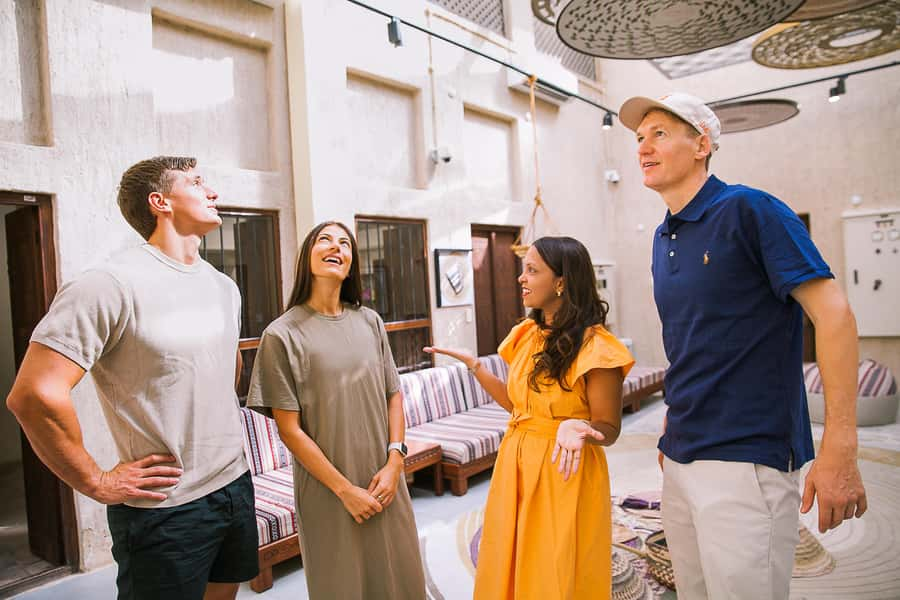
The guide is central to the experience. The advertised guide has more than 1,200 hours of experience and leads the tour in English. Guides named Pri, Dana, and Sameh have led this walk at different times. Their approach has included clear explanations, humor, local stories, and practical help with restaurants, public transport, and other parts of Dubai.
More Heritage Tours in Dubai
- Dubai: Historic City Highlights Day Trip
★ 4.4 · 807 reviews - Dubai Heritage & Burj Khalifa Experience
★ 4.0 · 500 reviews - Dubai Old Town, Culture, History, Street food and Souks Tour
★ 5.0 · 170 reviews
Al Bastakiya and the shape of old homes
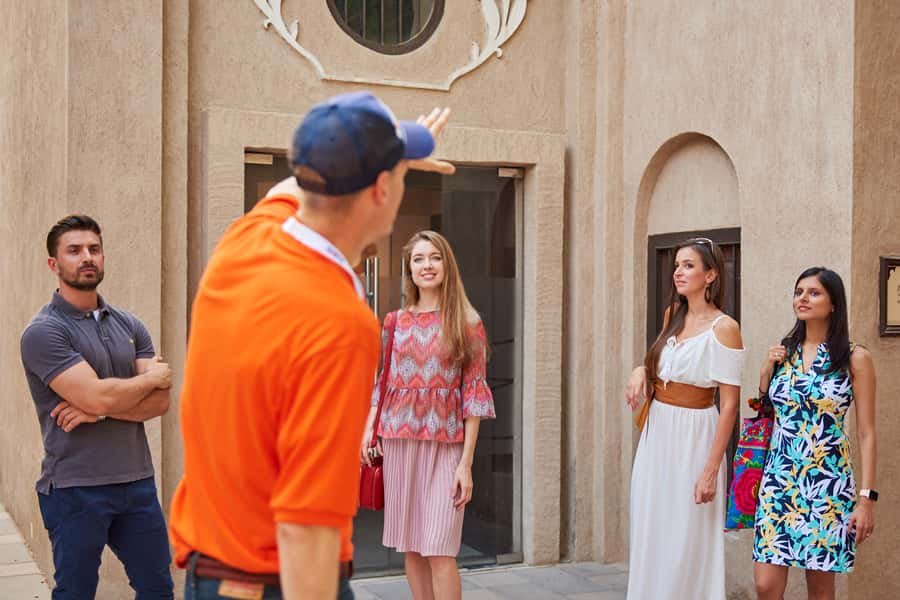
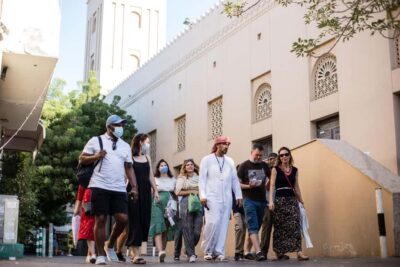
Al Bastakiya, also called the Al Fahidi Historical Neighborhood, is the most atmospheric part of the route. Its pale walls and narrow lanes offer a sharp contrast to Dubai’s glass-and-steel center.
The old houses were built around courtyards and often include wind towers. These towers helped draw air through the home before modern cooling systems became available. The design is not simply decorative. It shows how people adapted to a hot climate with local materials and practical building methods.
Your guide explains how this neighborhood functioned as a residential area, not just a preserved display. That distinction matters. You get a better sense of the people who lived here, the way homes were arranged, and how trade shaped the city’s early growth.
The lanes are also a good place for photographs. You can frame traditional doors, shaded passageways, textured walls, and small courtyards without the scale of Dubai’s newer districts getting in the way. Still, the walk is guided rather than free time for photography. If you stop often, you may need to catch up with the group.
Al Fahidi Fort and the city before the towers
Al Fahidi Fort is one of the key historical stops. Museum admission is included, so you do not need to budget a separate ticket for the museum portion of the visit.
The fort helps place Dubai’s development on a timeline. The tour is not limited to architecture. You’ll hear about the city’s food, culture, local etiquette, demographics, politics, and changing role in the region. The emphasis is on explaining how Dubai moved from a small trading community to a global destination.
That wider view is one of the tour’s useful features. A short visit to Dubai can leave you with a collection of disconnected sights. Here, the fort, homes, Creek, markets, and tastings are tied into one story.
Do not expect a large museum visit with hours of exhibits. The fort stop is part of a moving walking tour. You’ll get historical background and a sense of place, but the schedule is designed to keep the route moving.
Coffee, dates, and everyday customs
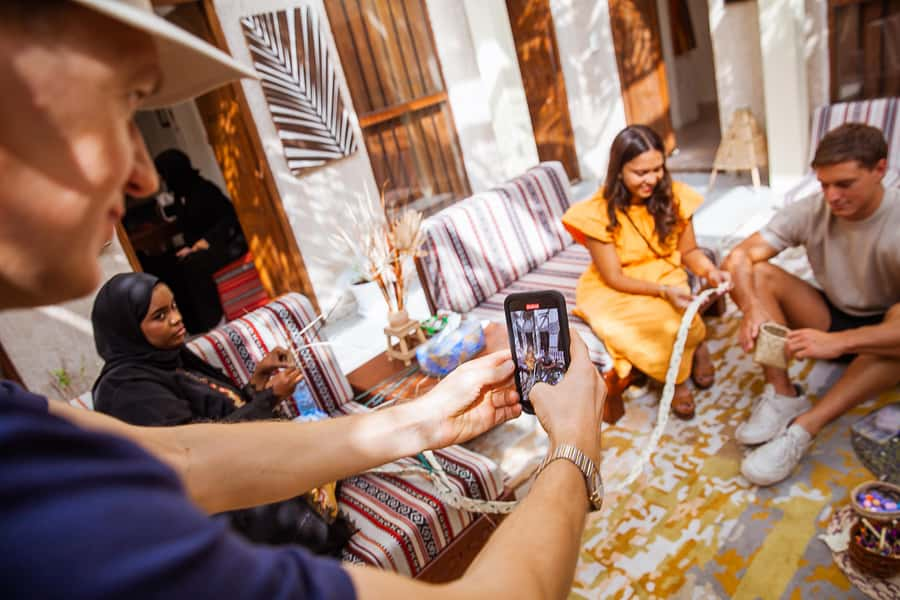
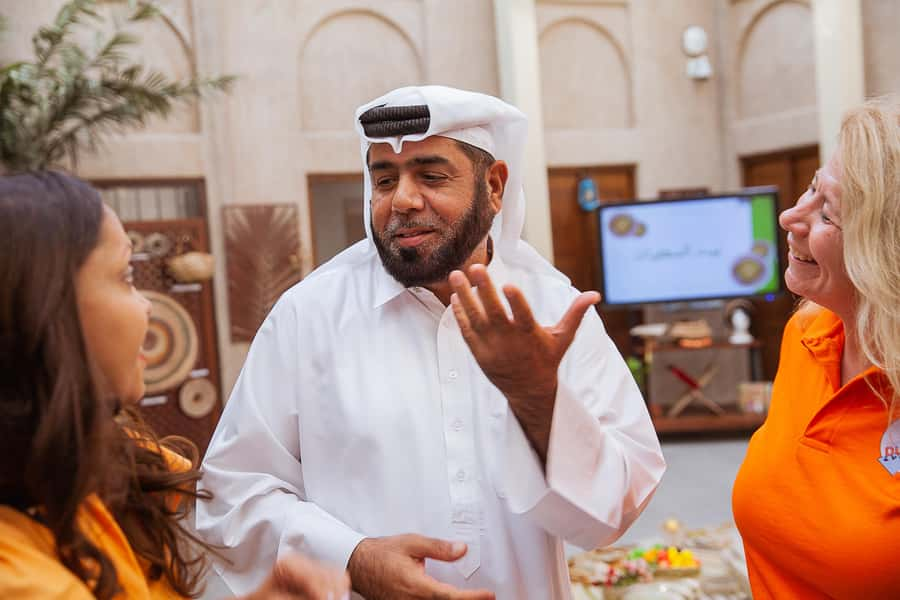
The included coffee and dates tasting gives the walk a welcome pause. Arabic coffee and dates are not random refreshments. They connect to hospitality and daily social customs in the region.
Your guide can explain how to accept refreshments, what certain gestures mean, and how local etiquette works. These small details are particularly helpful if this is your first visit to the United Arab Emirates. They give you something practical to carry into meals, homes, shops, and other encounters during your stay.
The tasting also breaks up the walking. Two hours is short, but the route covers a lot of ground. A brief food stop lets you listen, ask questions, and reset before heading toward the souks.
More walking tours in Dubai:
- Middle Eastern Food & Culture Walk in Old Dubai
★ 5.0 · 206 reviews - Historic Old Dubai & Souk Small Group Walking Tour
★ 5.0 · 156 reviews - Dubai Souks, Food & Culture Walking Tour
★ 5.0 · 132 reviews - Private Old Dubai Walking Tour: Forts, Souks, and Boats
★ 5.0 · 116 reviews
Crossing Dubai Creek by abra
The abra ride is the tour’s most memorable change of pace. An abra is a traditional wooden boat used to cross Dubai Creek. The trip is short, but it changes your view of the city.
From the water, you can see the Creek as a working route rather than a line on a map. The ride recalls the days when boats, traders, and goods connected the two sides of Old Dubai. It also gives you a break from the narrow streets and a chance to take photographs from a different angle.
The boat crossing is included in the tour, so there is no separate fare to arrange. It is worth keeping your phone or camera ready, but hold on to your belongings and follow the guide’s instructions around the boat.
This is not a private cruise or a long sightseeing voyage. Think of it as local transport with historical meaning. That makes it more authentic than a polished boat attraction, but it also means the ride is brief and practical.
Spice Souk tastes and strong smells
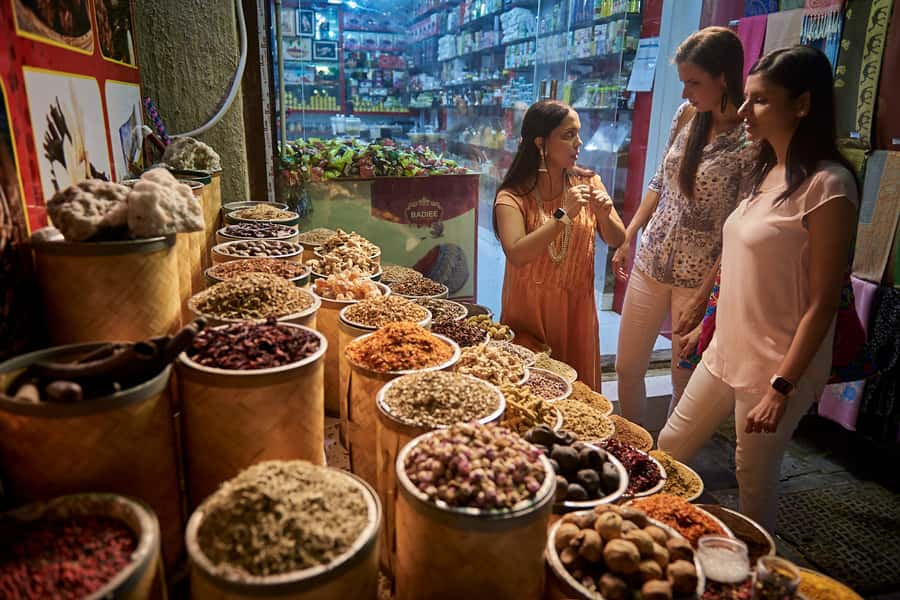
The spice souk is where the tour becomes most sensory. You’ll see sacks and displays of spices, dried goods, sweets, and other ingredients. The guide adds meaning to what you are seeing, explaining how food and trade fit into life in Dubai and the wider region.
The included tasting features chocolates and dried fruits. That is a useful touch because the souk can otherwise be easy to view only from the outside. You get to taste some of what is being sold and ask questions about ingredients and local use.
Expect shopkeepers to be friendly and sales-oriented. The route is designed to show you the market, not to turn the entire tour into a shopping session. If you want to buy saffron, dates, spices, or gifts, listen closely to the guide’s advice about quality, prices, and polite bargaining.
The spice souk can be crowded and full of competing smells. That is part of its appeal, but it may feel intense if you prefer quiet museums and open spaces. The guide’s explanations help turn the noise and activity into something easier to understand.
Textile Souk and gold market details
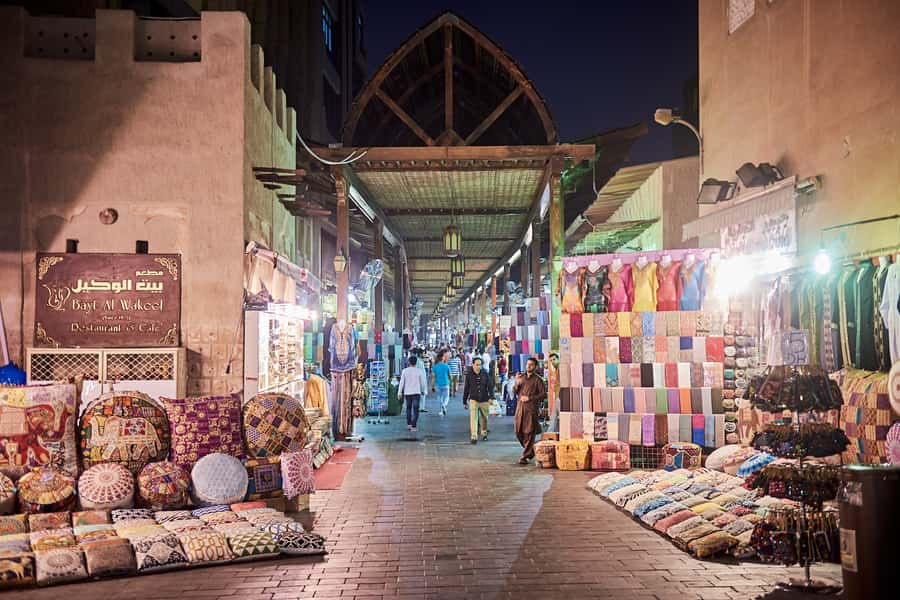
The textile souk gives the tour a different visual character. You may see fabrics, scarves, garments, and colorful materials arranged in small shops along the route. It is a good place to learn how bargaining works and how to compare items before buying.
The gold souk adds another side of Dubai’s trading culture. Displays are polished and highly commercial, but the market still belongs to the old trade district rather than the city’s modern malls. Your guide explains the customs and shopping practices that help you look without feeling pressured to buy.
The tour aims to include the textile, spice, and gold souks in one route. That is a major strength for a first visit because the markets are spread across Old Dubai and can be confusing to connect on your own.
The tradeoff is time. You’ll get an introduction to each market, not an extended shopping expedition. If you already know you want to buy fabric or gold, return later with more time and a clear budget.
Pearl trading and Dubai’s earlier economy
Pearl trading is an important part of the city’s earlier story. Before oil transformed Dubai’s economy, the Creek supported fishing, trade, boat traffic, and connections with nearby communities.
The guide uses this background to explain why the city developed where it did. You’ll hear about the role of the Creek, the importance of merchants, and the work that supported households before Dubai became known for finance, tourism, and architecture.
This context helps you read the old buildings more clearly. A wind tower is no longer just a photogenic feature. A boat crossing is not merely a pleasant ride. A souk is not only a place to buy spices. Each stop points back to a trading town built around water and commerce.
The tour also addresses myths and common misunderstandings about local customs. That can be especially useful if you have only seen Dubai through luxury hotels, shopping centers, or social media images.
What $54 buys you in two hours
At $54 per person, this is not the cheapest way to walk through Old Dubai. You can visit parts of the neighborhood on your own for little money, and an abra crossing is inexpensive as local transport.
The value comes from the structure and explanation. The fee includes a certified English-speaking guide, museum tickets, the abra ride, coffee and dates, and tastings in the spice souk. You are also getting one route that connects Al Bastakiya, Al Fahidi Fort, the Creek, and three major souks.
I think the price makes the most sense if you want history and cultural context without spending half a day planning your own route. It is also useful early in a Dubai visit because the guide can suggest restaurants, transport options, and other areas to see afterward.
The value is weaker if you mainly want unhurried shopping, long museum visits, or a private tour. Two hours passes quickly, and the group’s pace may not match your own interests at every stop.
Who will enjoy this walk most
I would choose this tour for a first visit to Dubai, especially if you want to understand the city beyond its modern center. It suits couples, families with older children, and solo visitors who prefer a guide to explain what they are seeing.
It is also a good fit if you like food samples, short boat rides, local markets, and stories about ordinary life. The tour offers a useful balance of walking, tasting, museum time, and transport.
You may want another option if you use a wheelchair. The tour is not suitable for wheelchair users, and the historic lanes, market areas, and boat boarding make access difficult.
This walk is also less suitable for anyone who dislikes heat, crowds, sales pitches, or uneven historic streets. Comfortable clothing helps, but it does not change the basic nature of the route.
Practical details for a smoother visit
Meet your guide outside Arabian Tea House in Bastakiya, on Al Fahidi Street, opposite the Musalla Post Office. Check the available start times when booking, since the activity lasts two hours and departure times can vary.
Wear comfortable shoes and clothing. Bring water, sun protection, and a small bag that you can keep secure on the abra. Those last items are practical suggestions for a walking route, though only comfortable shoes and clothes are specifically required.
The tour is in English. It includes museum tickets, the coffee and date tasting, chocolates and dried fruits in the spice souk, and the traditional boat crossing.
You can cancel up to 24 hours before the tour for a full refund. The reserve-now-and-pay-later option also helps if your Dubai schedule is still changing.
Should you book the Historic Forts, Boats and Pearls walk?
Book it if you want a compact, well-organized introduction to Dubai’s older side. The strongest parts are the guide-led history, the abra crossing, and the way the route ties the three souks to the Creek and the city’s trading past.
At $54, you are paying for interpretation and convenience as much as for entry and transport. I would book it near the start of your stay, then return to the souks later if you want to shop at a slower pace.
Skip it if you want a private, leisurely photography walk or a long shopping session. For most first-time visitors who want to understand how Dubai grew from a Creek-side trading town into a global city, this two-hour route offers a useful and enjoyable starting point.
FAQ
How long does the Historic Forts, Boats and Pearls of Old Dubai Walking Tour last?
The tour lasts two hours.
How much does the tour cost?
The listed price is $54 per person.
Where does the tour meet?
Meet your guide outside Arabian Tea House in Bastakiya, on Al Fahidi Street in Bur Dubai, opposite the Musalla Post Office.
Is the tour conducted in English?
Yes. The activity includes a live English-speaking guide.
Is the abra ride included?
Yes. The tour includes a traditional wooden abra ride across Dubai Creek.
Which souks does the tour visit?
The route includes the textile souk, spice souk, and gold souk.
Are museum tickets included?
Yes. Museum tickets are included in the tour.
Is the tour suitable for wheelchair users?
No. The activity is not suitable for wheelchair users.
More Old Town and Souk Tours in Dubai
- Dubai: Old Town, Creek, Museums, Souks, & Street Food Tour
★ 4.8 · 10,816 reviews - Dubai: Old Town, Souks, Street Food, Guided Tour & Abra Ride
★ 4.9 · 7,170 reviews - Dubai: Frame Tickets, Creek, Souks & Blue Mosque Guided Tour
★ 4.8 · 5,980 reviews - Dubai Aladdin Tour: Souks, Creek, Old Dubai and Tastings
★ 5.0 · 3,755 reviews
Just added around Dubai
- Can am Maverick X3 Rs Turbo★ 5.0 · 35 reviews
- Miracle Garden Admission Tickets with Transfer Options★ 5.0 · 12 reviews
- Deira Creek: Dhow Cruise Dinner★ 3.5 · 15 reviews
- Private Half-Day Tour in Dubai Miracle Garden and Global Village★ 5.0 · 21 reviews
- DXB Private Half-Day Dubai City Tour: Iconic Sights & Landmarks★ 5.0 · 34 reviews
- Dubai Nighttime City Tour with Airport or Hotel Transfer.★ 5.0 · 9 reviews
- Tickets for the DXB Boat Party at Sunset in Dubai★ 5.0 · 50 reviews
- Dubai Canal Dinner Cruise with La Perle Show Tickets Combo★ 4.5 · 56 reviews
Old Dubai and Souks, compared.
Old Town, Creek, Museums, Souks, & Street Food Tour
Our verdict on this one →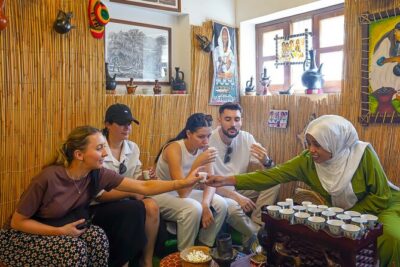
Old Town, Souks, Street Food, Guided Tour & Abra Ride
Our verdict on this one →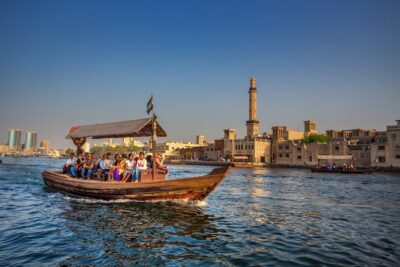
Frame Tickets, Creek, Souks & Blue Mosque Guided Tour
Our verdict on this one →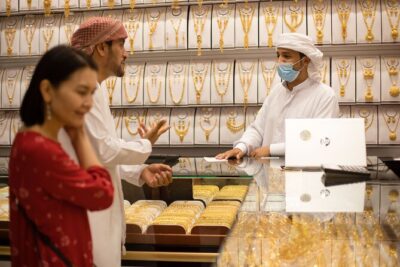
Dubai Aladdin Tour: Souks, Creek, Old Dubai and Tastings
Our verdict on this one →
Half-Day City Tour with Blue Mosque, Creek, and Souks
Our verdict on this one →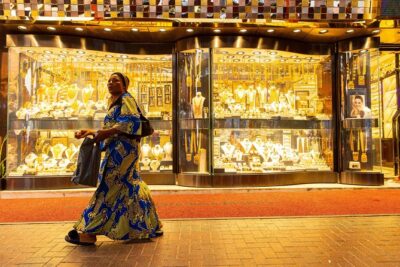
Dubai Half-Day City Tour with Visit to Dubai Gold Souk
Our verdict on this one →Old Town, Souks, Street Food, Guided Tour & Abra Ride
Our verdict on this one →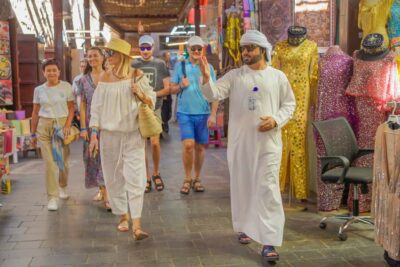
Old Town, Street Food, Creek, Souks, & Emirati House
Our verdict on this one →Browse the lists this tour appears in