
Reviewed · EMIRATI CULTURE EXPERIENCES
Dubai: Cultural Lunch at The Sheikh Mohammed Center
Dubai’s most useful cultural lesson may happen over a plate of rice, dates, and Arabic coffee. At the Sheikh Mohammed Center for Cultural Understanding, you sit in the courtyard of a traditional wind tower house and talk directly with an English-speaking Emirati host about daily life, religion, greetings, food, and social customs.
I like the open question format, which lets you move beyond rehearsed facts. I also like the Al Fahidi setting, where the meal takes place inside a historic trading village rather than a modern hotel. The main consideration is that the food may not match every diner’s idea of traditional Arabic cuisine. One past meal included dishes that felt more Indian than Arabic, so come for the cultural conversation as much as the menu.
Key points to know before booking
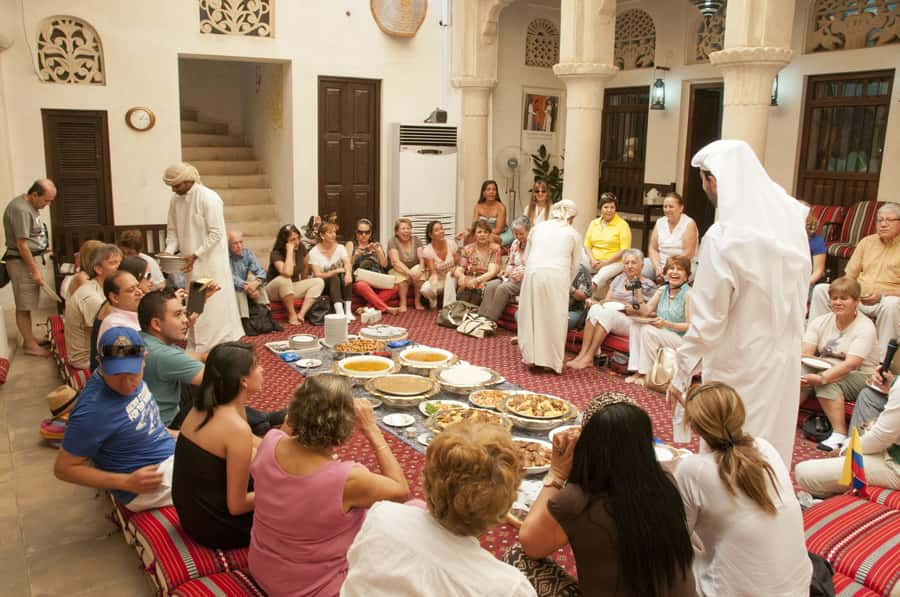
- A meal with a purpose: Lunch is used to explain Emirati customs, Islamic values, greetings, and local sensitivities.
- Traditional setting: You eat on floor cushions in a wind tower house in Al Fahidi Historic District.
- Ask direct questions: The center’s open-door approach encourages questions that can be difficult to raise elsewhere.
- Hosts set the tone: Past sessions have been led by hosts including Khaled, Nasser, Ruqaya, and Moeen Murad.
- A short, focused visit: The full experience lasts about 1.5 hours, making it easy to fit into a day in old Dubai.
- A few practical snags: Finding House 26 can take patience because signage and pathways around Al Fahidi may be unclear.
A cultural lunch in old Dubai
This is not simply a restaurant meal with a little background talk added. The food gives your host a natural way to explain how people eat, welcome one another, mark occasions, and show respect in the United Arab Emirates.
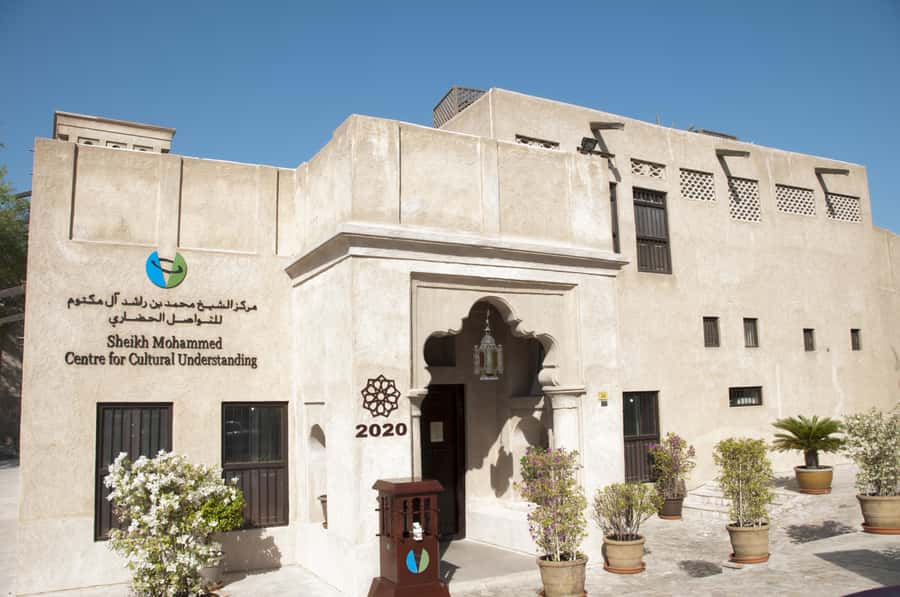
You begin at the Sheikh Mohammed Center for Cultural Understanding, known as SMCCU, at House 26 on Al Musallah Road. The center occupies a traditional wind tower house in the Al Bastakiya trading village, part of the Al Fahidi Historic District. The architecture matters here. Wind towers once helped cool homes before air conditioning, and the courtyard layout gives the meal a distinctly local setting.
You sit on traditional floor cushions rather than at a standard dining table. That makes the meal feel informal, though anyone who finds floor seating uncomfortable should keep the arrangement in mind before booking. The experience is wheelchair accessible, but the supplied information does not describe the exact seating setup or route through the historic house, so it is sensible to confirm any specific access needs in advance.
The meal lasts around 90 minutes. That is long enough for a proper conversation without taking over your day. I would place it early in a Dubai visit, since the basic explanations about greetings, modesty, religion, and hospitality can help you read later experiences with more understanding.
More Emirati Culture Experiences in Dubai
- Dubai: Old Town, Street Food, Creek, Souks, & Emirati House
★ 4.9 · 1,496 reviews - Authentic Emirati Cultural Meal and Talk in Old Dubai
★ 5.0 · 150 reviews - Dubai: Emirati Cultural Breakfast Experience
★ 4.7 · 42 reviews
Arabic coffee, dates, and a welcoming start
Arabic coffee and dates usually set the tone. You can expect coffee and tea along with the meal, and these simple items carry cultural meaning beyond their taste.
Your host may use the serving ritual to explain how hospitality works in Emirati homes. The point is not to memorize a set of rules. It is to understand why accepting an offering, returning a greeting, or showing patience at the table can matter in local social life.
The center also covers Arabic expressions and greetings. These details are useful because Dubai can feel highly international, yet social customs still shape interactions. A short explanation of how people greet one another or address elders may save you from treating a local custom as a strange formality.
Dates are an easy food to share, and the coffee service helps break down the distance between a formal presentation and a conversation. You are encouraged to ask questions as the meal progresses, rather than wait for a final question period.
Emirati dishes and what to expect on the plate
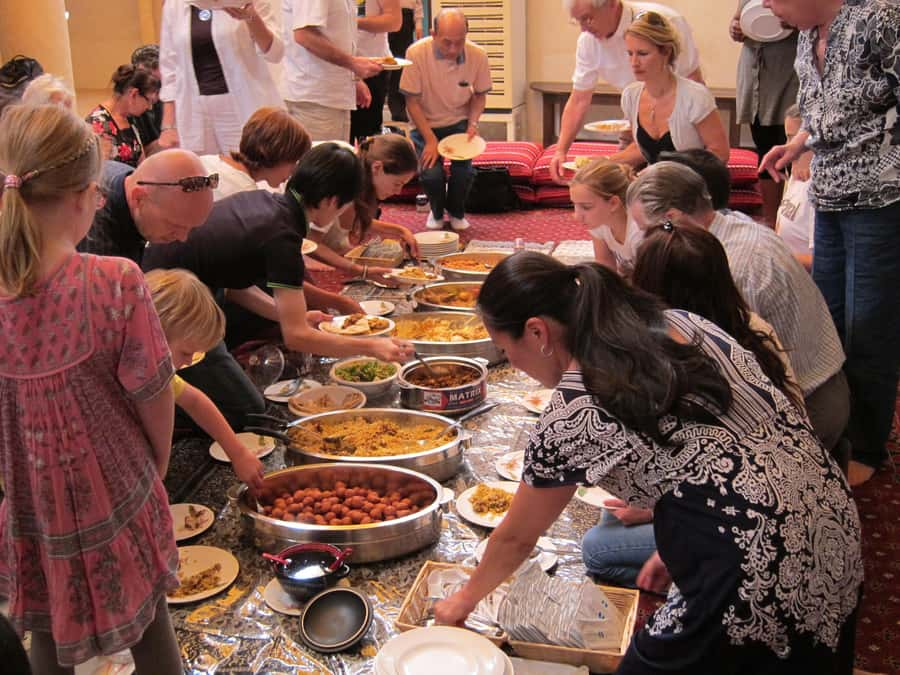
The lunch includes a selection of local Emirati dishes and dessert. The exact menu is not provided, so you should not book this expecting one fixed list of recipes. You will have the chance to taste traditional food, but the dishes may vary.
Past diners have described the food as delicious, good, and traditional. One particularly useful point is that a meal was described as more Indian than Arabic. That does not make the lunch a poor choice, but it does set a fair expectation: the cultural value is more dependable than a precise culinary lineup.
You may enjoy the meal most if you approach it as a sample of the region’s food culture rather than a formal cooking class. The meal is not advertised as a lesson in recipes, market shopping, or food preparation. Instead, the dishes support a broader discussion of local life.
If you have strong dietary needs, ask before booking because the supplied details do not list vegetarian, vegan, allergy, or religious dietary arrangements. The information does confirm that local Emirati dishes, dessert, Arabic coffee, tea, and dates are included.
The questions are the real attraction
The strongest feature is the invitation to ask almost anything about Emirati culture. The center uses the motto Open Doors, Open Mind, and that idea shapes the visit.
You can ask about Islam’s influence on local values and sensitivities, family customs, traditional greetings, or everyday behavior. You can also ask the questions that do not fit neatly into a sightseeing tour. The setting is intended to improve communication between local people and international visitors, so the conversation is part of the main event, not a side benefit.
The quality of the session depends partly on the host leading it. Past sessions have included Khaled, Nasser, Ruqaya, and Moeen Murad. The supplied information does not promise a particular host on a particular date, but these names give you a sense of the personal nature of the program. The best hosts use humor, answer fully, and encourage the room to speak up.
I would prepare a few questions before arriving. Ask how a custom developed, what a visitor should do in a particular situation, or how religious values affect ordinary routines. You do not need specialist knowledge. A curious and respectful question is enough.
Same area, a completely different kind of day:
- Dubai: Burj Khalifa Levels 124 & 125 Entry Ticket + Options
★ 4.3 · 90,891 reviews - Dubai: Burj Khalifa Sky Level 148, 124, & 125 Entry Ticket
★ 4.6 · 23,827 reviews - Dubai: The View At The Palm Observatory Entry Ticket
★ 4.6 · 22,529 reviews - Dubai: Jetski to Burj Arab-Atlantis w Pic, Video & Icecream
★ 4.9 · 22,260 reviews
Islam, local values, and cultural sensitivity
The program makes room for Islam as part of daily Emirati life. This is useful because Dubai’s polished shopping malls, hotels, and entertainment districts can make the country seem culturally familiar to anyone who has visited a global city.
At SMCCU, you can learn how religion connects with ideas about hospitality, modesty, family, respect, and social behavior. The goal is not religious instruction in a formal sense. It is a chance to understand the values behind customs you may notice during your stay.
This kind of conversation can also clear up misunderstandings. A rule that seems strict from the outside may have a social or religious reason that is not obvious at first glance. Your host can explain these matters in a direct, informal way.
Keep your questions polite and listen carefully to the answer. The center welcomes open discussion, but openness works best when it is matched by respect. You are not being asked to agree with every custom. You are being given a clearer view of why it matters to people who live with it.
Finding House 26 in Al Fahidi
The meeting point is House 26, Al Musallah Road, in the Al Fahidi Historic District, next to the Ruler’s Court. This is a central advantage because you can combine lunch with time in one of Dubai’s most atmospheric old neighborhoods.
The practical weakness is finding the exact entrance. Al Fahidi has narrow routes, construction can block paths, and signs are not always easy to follow. One useful warning is not to assume that a welcome sign at one door means you have found the correct entrance. Allow extra time and check the house number carefully.
Once inside, the change from modern Dubai is immediate. The wind tower house and courtyard provide the right backdrop for a conversation about older ways of living and trading. You do not need a separate architectural tour to appreciate the setting, though you may want to explore more of Al Fahidi before or after the lunch.
The meeting point is not described as a hotel pickup location. Plan to make your own way to House 26. Since the experience lasts only 1.5 hours, arriving late could cut into the meal and discussion.
Is $42 a fair price?
At $42 per person, this is not the cheapest lunch in Dubai. You are paying for more than food, though. The fee covers the meal, local dishes, Arabic coffee, tea, dates, the historic setting, and a guided cultural exchange in English.
I think the price is fair if you want context and conversation. A regular meal may give you better value if your only goal is to eat Emirati food. A museum may give you more time with objects and exhibits. SMCCU offers something different: direct access to a host who can respond to your questions in the moment.
The value improves if you are new to the UAE. A first-day visit can give you useful background for the rest of your trip. You may understand local behavior more clearly and feel more comfortable asking questions in other settings.
The value is less certain for anyone who expects a large tasting menu, a cooking demonstration, or a guaranteed list of famous regional dishes. The menu is described as a selection of local food, not as a full culinary workshop.
Who will enjoy this experience most?
I would recommend it to first-time visitors who want more than malls, observation decks, and polished hotel restaurants. It also suits people who enjoy asking questions and listening to personal explanations.
Families may find the relaxed format easier than a formal museum visit, though parents should consider whether younger children will sit comfortably on floor cushions for 90 minutes. It can also work well for couples, solo visitors, and small groups with an interest in religion, food, architecture, or social customs.
The session is conducted in English. That makes it practical for English-speaking visitors, but it is not presented as a multilingual experience. The listed host or greeter language is English.
You may want to skip it if you dislike group discussion, prefer a tightly timed food tour, or need a guaranteed menu for dietary reasons. You may also prefer a longer cultural program if you want detailed history, neighborhood walking, or a hands-on cooking activity.
How to get more from the 90 minutes
Start by treating the meal as a conversation, not a performance. Ask your first question early. Once the room begins talking, the session is likely to feel more natural and less like a lecture.
A few useful subjects include:
- How Emirati greetings change with age, status, or familiarity
- The role of Islam in ordinary social behavior
- How traditional homes used wind towers
- What visitors often misunderstand about local customs
- How hospitality is shown in an Emirati home
- Which dishes are especially important at family meals
Listen for the difference between a formal rule and a common habit. That distinction often tells you more about local life than a list of do’s and don’ts.
You may also be able to take leftover food with you. One past account described takeaway containers and bags being available. This is not presented as a guaranteed part of the program, so bring no expectations, but you can ask your host if there is food remaining.
The environmental point is worth noting too. A past session used small plastic water containers and plastic packaging for takeaway food. If reducing waste matters to you, ask about the center’s current practice and consider bringing a reusable container if you hope to take food away.
Booking and practical details
The experience costs $42 per person and lasts 1.5 hours. Starting times vary, so check availability for your chosen date.
Cancellation is free up to 24 hours in advance for a full refund. You can also reserve your place and pay later, which helps if your Dubai schedule is still changing.
The activity is wheelchair accessible. Since it takes place in a traditional historic building, confirm the details if you use a particular chair or need step-free access to the seating area.
The center is at House 26, Al Musallah Road, beside the Ruler’s Court, in Al Fahidi Historic District. Give yourself extra time to locate it, especially if construction or blocked paths affect the area.
Should you book the SMCCU cultural lunch?
Book it if you want a direct, friendly introduction to Emirati culture and are willing to take part in the conversation. The setting is special, the coffee and dates create a warm start, and the open question format gives you access to subjects that ordinary sightseeing often avoids.
I would make this an early Dubai activity, particularly if you have never visited the UAE. The food may not be exactly what you expect, and the signage near House 26 may test your patience, but those are manageable drawbacks.
Choose another experience if your main goal is a fixed menu, a cooking lesson, or a long guided walk. Choose SMCCU if your priority is understanding how local customs, Islam, hospitality, and daily life fit together over a relaxed meal.
FAQ
Where does the cultural lunch take place?
It takes place at House 26 on Al Musallah Road in the Al Fahidi Historic District, adjacent to the Ruler’s Court.
How long does the experience last?
The cultural lunch lasts about 1.5 hours.
How much does it cost?
The listed price is $42 per person.
What food is included?
You receive a selection of local Emirati dishes, dessert, Arabic coffee, tea, and dates.
Is the menu fixed?
The available information describes a selection of local dishes but does not provide a fixed menu.
What language is used?
The host or greeter language is English.
Can I ask questions about Islam and Emirati customs?
Yes. The program encourages questions about local culture, customs, religion, values, greetings, and sensitivities.
Is the activity wheelchair accessible?
Yes, the activity is listed as wheelchair accessible.
Can I cancel for a refund?
You can cancel up to 24 hours in advance for a full refund.
Can I reserve now and pay later?
Yes. The activity allows you to reserve your place and pay later.
Just added around Dubai
- Can am Maverick X3 Rs Turbo★ 5.0 · 35 reviews
- Miracle Garden Admission Tickets with Transfer Options★ 5.0 · 12 reviews
- Deira Creek: Dhow Cruise Dinner★ 3.5 · 15 reviews
- Private Half-Day Tour in Dubai Miracle Garden and Global Village★ 5.0 · 21 reviews
- DXB Private Half-Day Dubai City Tour: Iconic Sights & Landmarks★ 5.0 · 34 reviews
- Dubai Nighttime City Tour with Airport or Hotel Transfer.★ 5.0 · 9 reviews
- Tickets for the DXB Boat Party at Sunset in Dubai★ 5.0 · 50 reviews
- Dubai Canal Dinner Cruise with La Perle Show Tickets Combo★ 4.5 · 56 reviews
Emirati Culture Experiences, compared.
Old Town, Street Food, Creek, Souks, & Emirati House
Our verdict on this one →
Dubai Desert Safari with BBQ, 3 Shows & Camel Ride at Majlis Camp
Our verdict on this one →
Dubai Desert Safari, Camel Ride, Shisha, Henna, Live BBQ & Shows
Our verdict on this one →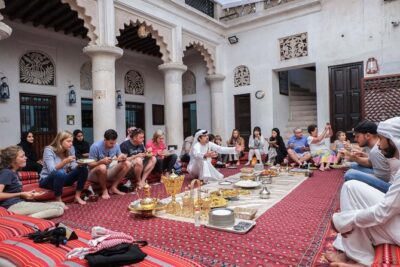
Authentic Emirati Cultural Meal and Talk in Old Dubai
Our verdict on this one →
Dubai Hummer Safari Adventure & Traditional Dress Photoshoot
Our verdict on this one →
Private Abu Dhabi tour with Emirati Guide
Our verdict on this one →

Browse the lists this tour appears in