
Reviewed · OLD DUBAI AND SOUKS
Dubai: Al Fahidi Historical District Heritage Tour
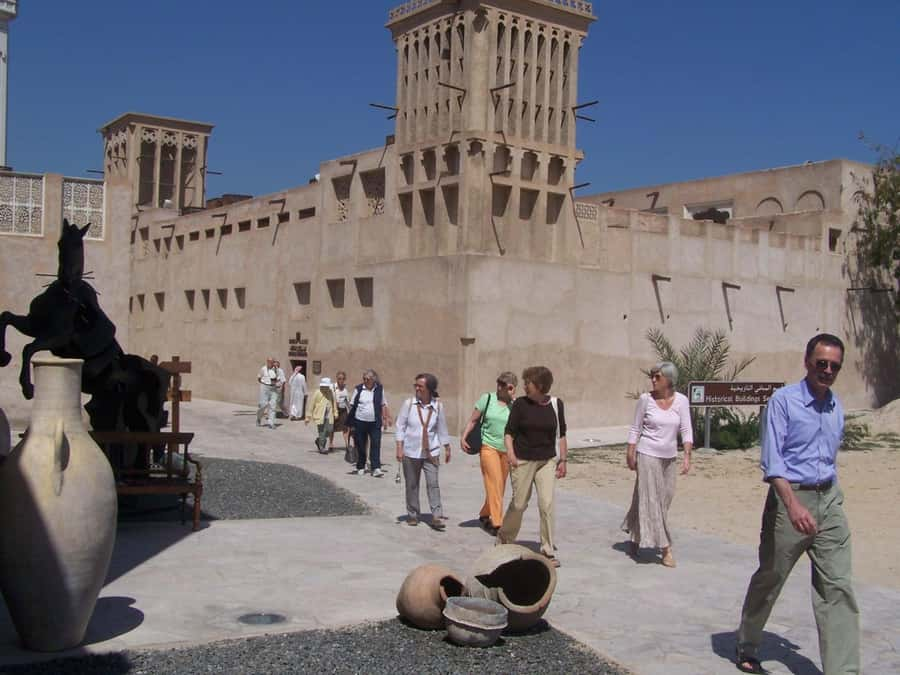
Dubai’s oldest surviving neighborhood feels like a useful reset after a morning of glass towers and shopping malls. In Al Fahidi Historical District, you walk past traditional windtower houses, learn how Dubai’s Creek settlement once worked, and step inside the Ruler’s Court Mosque, an area normally closed to the public.
I like the direct cultural conversation at the Sheikh Mohammed Center for Cultural Understanding, where you can ask about Islam, Emirati customs, and daily life without having to guess which questions are acceptable. I also like the simple welcome of Arabic coffee and dates. The main drawback is the pace: a large part of the 90 minutes is devoted to conversation, so anyone expecting a long walking tour may find the outdoor portion brief.
Key points to know before you book
- Windtower houses: See the last remaining examples of Al Fahidi’s traditional cooling design.
- Ruler’s Court Mosque: Enter with SMCCU access and hear how the mosque fits into Emirati life.
- Open cultural Q&A: Ask direct questions about local customs, religion, and life in the UAE.
- Arabic welcome: Share Arabic coffee and dates at the SMCCU windtower house.
- Compact format: The tour lasts 1.5 hours, making it easy to fit into a Dubai sightseeing day.
- Practical access: The tour is in English, wheelchair accessible, and borrowed attire is available for the mosque visit.
Why Al Fahidi is the right place to learn about old Dubai
Dubai is best known for its high-rises, artificial islands, huge malls, and polished hotels. Al Fahidi offers a different picture: low houses, narrow lanes, shaded courtyards, and windtowers built before air-conditioning changed daily life.
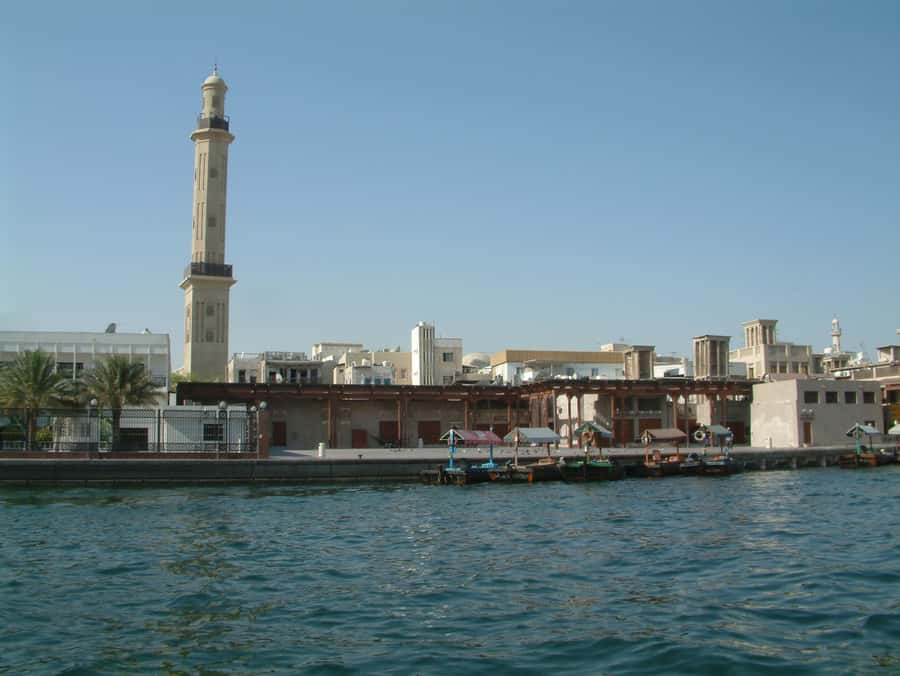
This district grew beside Dubai Creek, where trade and settlement shaped the city long before the modern skyline appeared. The tour helps you read the buildings rather than simply photograph them. A windtower is not just a decorative feature. It reflects a practical way of catching air and making homes more comfortable in a hot climate.
I find this context valuable because Al Fahidi can otherwise feel like a pleasant collection of old walls with no clear story. Your guide connects the architecture to Dubai’s earlier Creek settlement and explains how people used these houses. The setting gives you a physical link to the city’s past, while the conversation at SMCCU gives you a way to connect that past with life in the Emirates today.
Do not expect a large archaeological site or a long museum visit. This is a living district with a focused cultural program. You spend enough time outdoors to understand the setting, but the tour is not designed as a full neighborhood walk.
More Heritage Tours in Dubai
- Dubai: Historic City Highlights Day Trip
★ 4.4 · 807 reviews - Dubai Heritage & Burj Khalifa Experience
★ 4.0 · 500 reviews - Dubai Old Town, Culture, History, Street food and Souks Tour
★ 5.0 · 170 reviews
Starting at the SMCCU windtower house
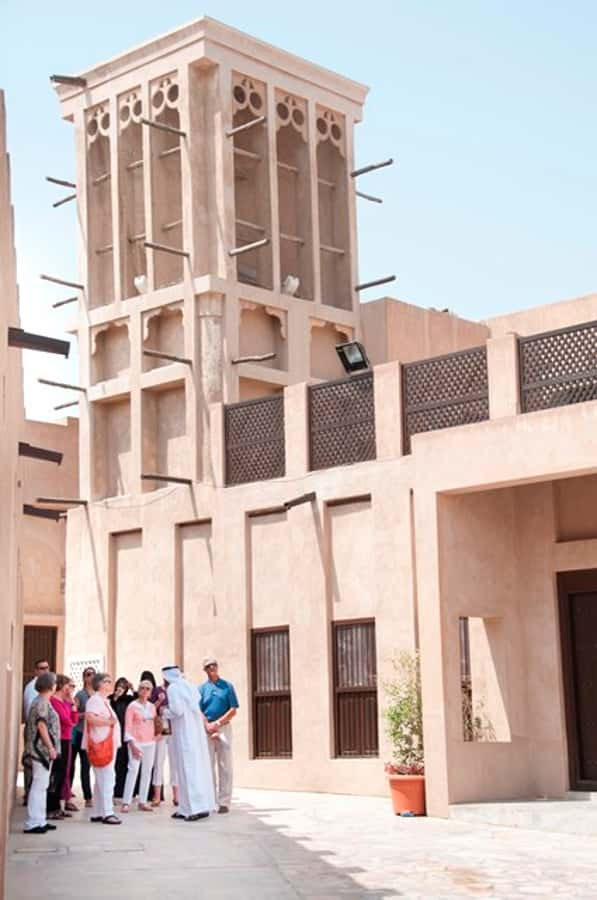
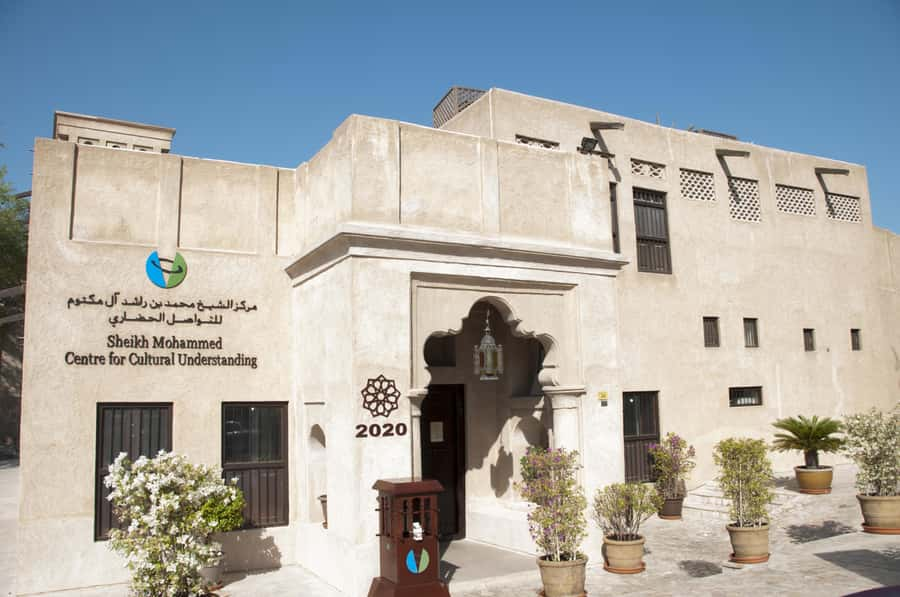
The experience begins at the Sheikh Mohammed Center for Cultural Understanding, known as SMCCU, at House 26 on Al Musallah Road near the Al Seef roundabout. The house is adjacent to The Ruler’s Court, close to the British Embassy, and just behind the Al Seef roundabout.
This meeting point matters because SMCCU is not simply a ticket booth. It is the base for the cultural discussion, the traditional welcome, and the coffee and dates at the end. You begin in the same type of windtower house that helps define the district, so the setting introduces the theme before the walking portion starts.
The tour is led in English by a live guide. No individual guide names are provided, so you should book this for the subject and format rather than for a particular presenter. The strongest part of the experience depends on how actively you use the question period. If you arrive with curiosity about local customs, family life, religion, or Dubai’s rapid change, you can get far more from the session than someone who simply waits for a standard speech.
The short walk through Al Fahidi’s traditional architecture
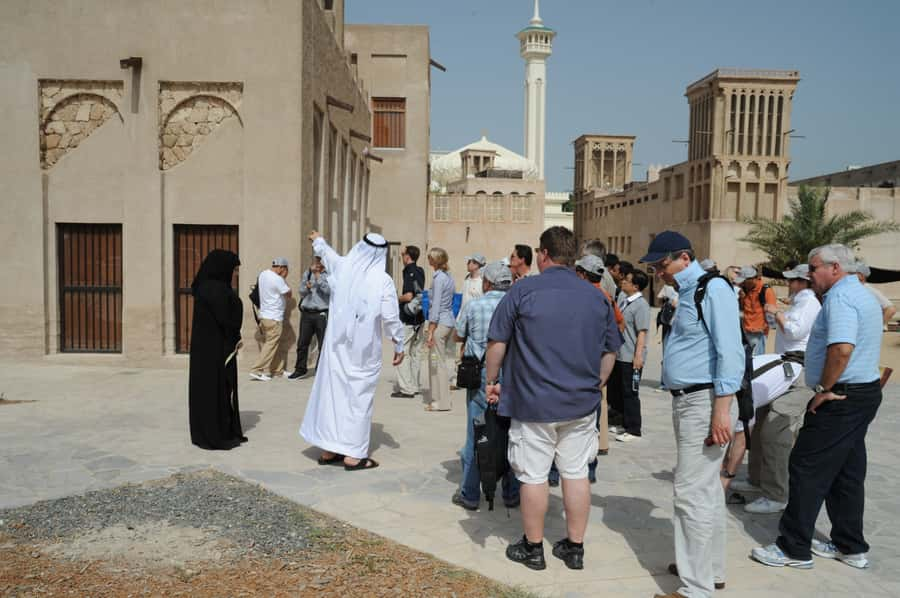
From the SMCCU house, you stroll through Al Fahidi Historical District and Al Bastakiya. The appeal here is in the details: windtowers, traditional building forms, shaded passages, and the sense of an older settlement beside the Creek.
The guide explains the architecture and the history of the buildings. You learn how these homes relate to Dubai’s earlier life, when the city was a smaller Creek community rather than a global business center. That background gives the neighborhood more meaning than a quick self-guided photo stop.
The walk is not especially long, and that is important to understand before booking. One published experience describes a visitor leaving early after expecting more time walking through the district and finding that much of the tour involved sitting and discussing culture. The cultural discussion is a central part of the format, not a filler between sights.
I see this as a strength if you want explanation, not just scenery. It is a limitation if your priority is covering every lane, courtyard, or nearby attraction. You get a focused introduction rather than a broad walking circuit.
Entering the Ruler’s Court Mosque
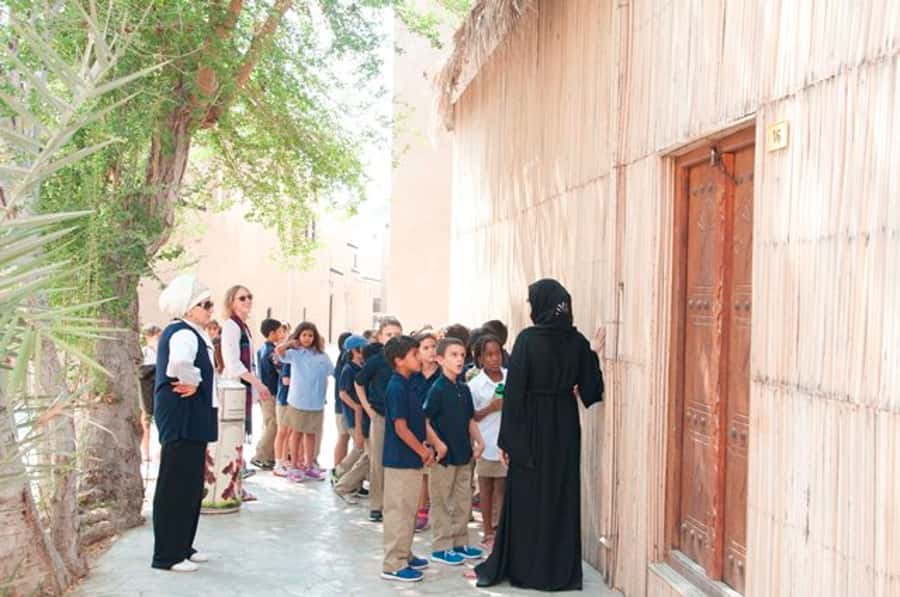
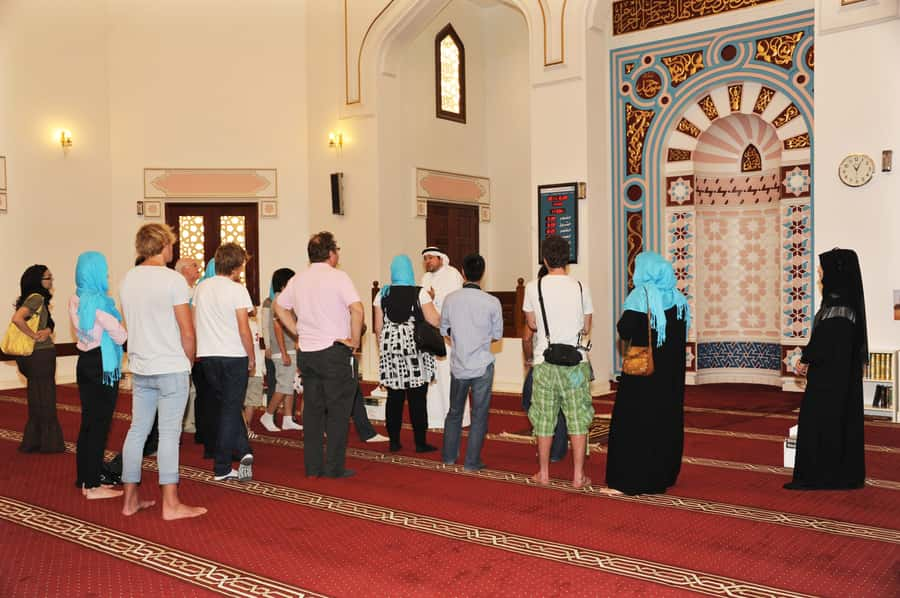
The tour continues to the Ruler’s Court Mosque for a short discussion about the mosque and its place in Emirati life. Access is limited to people taking part in the SMCCU program, making this one of the more distinctive parts of the visit.
A mosque visit can be more useful when someone explains the customs and meaning behind the space. Here, the focus is not only on the building itself. Your guide discusses the mosque as part of ordinary religious and community life in the Emirates, with insight into Islam included in the presentation.
SMCCU provides attire that you can borrow for this part of the tour. That removes one common worry about visiting a religious site. You still want to dress respectfully, but you do not need to arrive with special clothing in order to take part.
The mosque portion is short, so keep your expectations in proportion. This is not a lengthy religious lecture or a full architectural tour. It is a compact introduction that works well alongside the open questions at SMCCU. If religion and local customs are subjects you want to understand better, this stop may be the most useful part of the itinerary.
Same area, a completely different kind of day:
- Dubai: Burj Khalifa Levels 124 & 125 Entry Ticket + Options
★ 4.3 · 90,891 reviews - Dubai: Burj Khalifa Sky Level 148, 124, & 125 Entry Ticket
★ 4.6 · 23,827 reviews - Dubai: The View At The Palm Observatory Entry Ticket
★ 4.6 · 22,529 reviews - Dubai: Jetski to Burj Arab-Atlantis w Pic, Video & Icecream
★ 4.9 · 22,260 reviews
Arabic coffee, dates, and direct questions at SMCCU
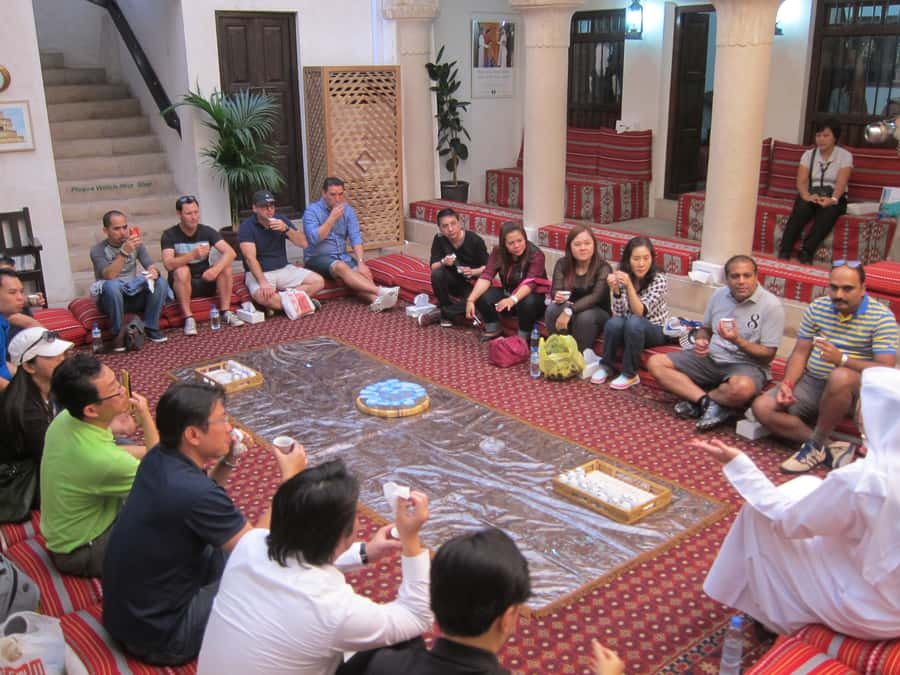
After the mosque visit, you return to the SMCCU windtower house for Arabic coffee and dates. The refreshments are modest, but they make the welcome feel personal rather than purely academic.
The bigger value is the question-and-answer format. SMCCU’s philosophy is Open Doors. Open Minds., and the program aims to explain local culture, customs, and religion while improving communication between people from the UAE and those visiting from elsewhere.
You can ask questions throughout the experience. The format is designed for direct conversation, including topics that may feel sensitive or unfamiliar. That makes this especially useful if you have wondered about Emirati traditions but have not found a comfortable way to ask about them.
The tone is educational rather than theatrical. You are not being shown a staged folk performance or rushed through a list of local symbols. You are given a place to listen, ask, and connect the buildings and religious setting with present-day life.
This is also where the tour’s value depends most on your own participation. Come with a few questions ready. Ask about the things you notice in the district, the role of religion, or how local customs fit into city life. The 90-minute schedule passes quickly if the discussion is active.
What the $31 price gives you
At $31 per person, this is not the cheapest way to see old Dubai. You are paying for more than access to a historic neighborhood, though. The fee includes a live English-speaking guide, the guided Al Fahidi visit, entrance to the Ruler’s Court Mosque and SMCCU, and Arabic coffee with dates.
The strongest value comes from the access and explanation. You could walk around Al Fahidi on your own for less, but you would not necessarily enter the Ruler’s Court Mosque or have the same structured opportunity to ask questions about Emirati culture and Islam.
The price makes the most sense for a first visit to Dubai, especially if you want cultural context early in your trip. It is also useful if you are spending only a short time in the city and want one compact experience that combines architecture, religion, and conversation.
I would compare it less with a standard sightseeing walk and more with a small cultural orientation. If you want two hours of continuous outdoor walking, the value may feel weaker. If you want access, explanation, and an honest discussion in a traditional house, $31 is reasonable.
How the 90-minute timing shapes the experience
The tour lasts 1.5 hours, which makes it easy to fit before lunch, after a morning visit, or alongside time around Al Seef and Dubai Creek. The short length is also useful in Dubai’s heat, since you are not committed to a long outdoor route.
The schedule appears to divide its attention between three elements: the Al Fahidi walk, the mosque visit, and conversation at SMCCU. The exact amount of time at each point can vary with questions and discussion, but you should expect the cultural talk to take a substantial share of the experience.
That format suits you if you prefer a focused introduction. It may frustrate you if you arrive expecting a guide to lead you through the entire historic district at a steady walking pace. The tour is best treated as a cultural session with a neighborhood walk, not as a neighborhood walk with a few facts added.
The compact timing also means you can leave with a clear first impression without giving up most of your day. One of the strongest responses describes the experience as the best activity of a Dubai visit, while another positive response simply notes how much the person learned. That pattern fits the tour’s purpose: its impact comes from understanding, not from the number of sights checked off.
Who will get the most from this tour
I would choose this tour for first-time visitors who want help reading Dubai beyond its modern image. It suits anyone interested in Islam, local customs, architecture, and the connection between Dubai’s older Creek community and its present identity.
Families may also find the question format useful because children often ask the most direct questions. The mosque attire provided by SMCCU makes the visit easier for people who did not plan a religious-site visit in advance.
It is a good choice for visitors who enjoy conversation and do not mind sitting for part of a tour. The wheelchair-accessible format adds practical value, though the supplied information does not describe the specific route or surfaces in detail, so you may want to confirm any individual mobility needs before booking.
I would choose a different experience if your main goal is photography, shopping, or a long historic walk. Al Fahidi is the setting, but SMCCU’s cultural program is the heart of the visit.
Simple ways to prepare
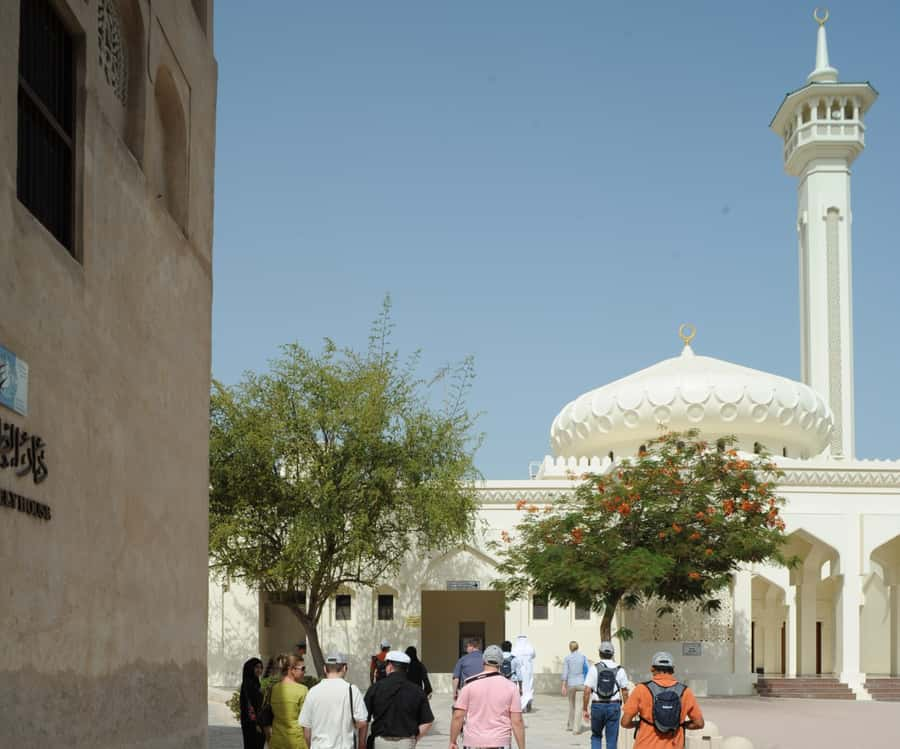
Wear comfortable clothing suitable for a religious setting. SMCCU provides attire for the mosque portion, but respectful clothing is still the sensible choice.
Arrive ready to listen and ask. Think about what you want to understand before you reach the meeting point. Questions about local customs, religion, architecture, and daily life will help you make better use of the cultural session.
Allow time to find House 26 near the Al Seef roundabout. The meeting point is at the SMCCU windtower house, adjacent to The Ruler’s Court and near the British Embassy, rather than at a general Al Fahidi entrance.
The activity is offered in English. If you need another language, this tour is not presented as a multilingual option.
Free cancellation is available up to 24 hours before the start time, and you can reserve now while paying later. Those terms are useful if your Dubai plans are still shifting, but the main decision remains whether a conversation-led cultural visit suits you.
Should you book the Al Fahidi heritage tour?
Book it if you want to understand Dubai’s older buildings, enter the Ruler’s Court Mosque with guidance, and ask honest questions about Emirati life. The Arabic coffee, dates, and traditional house add a warm finish, while the SMCCU format gives the visit a purpose beyond taking pictures.
Skip it if you want a long walking tour with constant movement. The cultural discussion is central, and one person found that mismatch disappointing after expecting more time in the streets.
For $31 and 90 minutes, I think this is a strong introduction to old Dubai for curious first-time visitors. Bring questions, accept that the walk is brief, and you will get the most from what this experience is designed to offer.
FAQ
Where does the tour meet?
Meet at the Sheikh Mohammed Center for Cultural Understanding, House 26, Al Musallah Road, near the Al Seef roundabout in Bur Dubai.
How long does the experience last?
The tour lasts 1.5 hours.
What language is the tour offered in?
The live guided tour is offered in English.
What places are included?
The experience includes the Al Fahidi Historical District, Al Bastakiya, the Ruler’s Court Mosque, and the SMCCU windtower house.
Can I enter the Ruler’s Court Mosque?
Yes. Entrance to the Ruler’s Court Mosque is included for people taking part in the SMCCU tour.
Is clothing provided for the mosque visit?
Yes. SMCCU provides attire that can be borrowed during the mosque portion of the tour.
Are refreshments included?
Yes. Arabic coffee and dates are included.
Is the tour wheelchair accessible?
Yes. The activity is listed as wheelchair accessible.
Can I ask questions about Emirati culture and religion?
Yes. The SMCCU program includes a cultural question-and-answer session, and questions about local life, customs, and religion are welcomed.
What is the cancellation policy?
You can cancel up to 24 hours in advance for a full refund. You can also reserve now and pay later.
More Old Town and Souk Tours in Dubai
- Dubai: Old Town, Creek, Museums, Souks, & Street Food Tour
★ 4.8 · 10,816 reviews - Dubai: Old Town, Souks, Street Food, Guided Tour & Abra Ride
★ 4.9 · 7,170 reviews - Dubai: Frame Tickets, Creek, Souks & Blue Mosque Guided Tour
★ 4.8 · 5,980 reviews - Dubai Aladdin Tour: Souks, Creek, Old Dubai and Tastings
★ 5.0 · 3,755 reviews
Just added around Dubai
- Can am Maverick X3 Rs Turbo★ 5.0 · 35 reviews
- Miracle Garden Admission Tickets with Transfer Options★ 5.0 · 12 reviews
- Deira Creek: Dhow Cruise Dinner★ 3.5 · 15 reviews
- Private Half-Day Tour in Dubai Miracle Garden and Global Village★ 5.0 · 21 reviews
- DXB Private Half-Day Dubai City Tour: Iconic Sights & Landmarks★ 5.0 · 34 reviews
- Dubai Nighttime City Tour with Airport or Hotel Transfer.★ 5.0 · 9 reviews
- Tickets for the DXB Boat Party at Sunset in Dubai★ 5.0 · 50 reviews
- Dubai Canal Dinner Cruise with La Perle Show Tickets Combo★ 4.5 · 56 reviews
Old Dubai and Souks, compared.
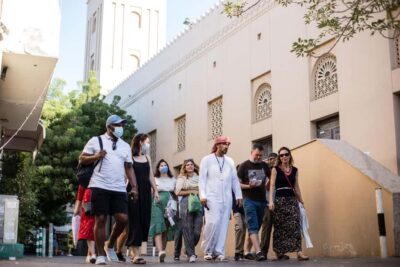
Old Town, Creek, Museums, Souks, & Street Food Tour
Our verdict on this one →
Old Town, Souks, Street Food, Guided Tour & Abra Ride
Our verdict on this one →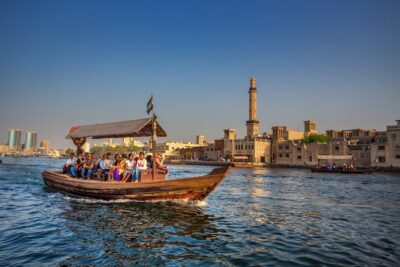
Frame Tickets, Creek, Souks & Blue Mosque Guided Tour
Our verdict on this one →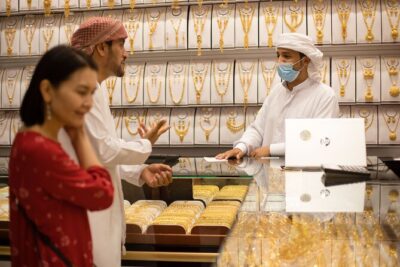
Dubai Aladdin Tour: Souks, Creek, Old Dubai and Tastings
Our verdict on this one →
Half-Day City Tour with Blue Mosque, Creek, and Souks
Our verdict on this one →
Dubai Half-Day City Tour with Visit to Dubai Gold Souk
Our verdict on this one →Old Town, Souks, Street Food, Guided Tour & Abra Ride
Our verdict on this one →
Old Town, Street Food, Creek, Souks, & Emirati House
Our verdict on this one →Browse the lists this tour appears in