
Reviewed · MUSEUMS
Dubai: Museum of the Future Admission Ticket
Dubai’s Museum of the Future begins with a space-age launch rather than a dusty display case. You move through a series of imagined worlds covering space travel, climate change, robotics, health, spirituality, and smart cities. I like the interactive approach and the way the building itself becomes part of the visit.
I also like the open viewing platform, which gives you a different look at Dubai’s grand architecture, and the friendly staff stationed throughout the galleries. The main drawback is price: at $46 per person, this is not a cheap stop, and busy periods can make skip-the-line access worth serious consideration.
Key points to know
- The opening feels like a space launch: The first section presents your visit as a journey 50 years into the future.
- The building is part of the attraction: Its huge ring shape and Arabic calligraphy windows are worth seeing from outside, especially at night.
- The themes are broad: Expect exhibits on space, climate, health, wellness, spirituality, robotics, AI, energy, education, and transport.
- Skip-the-line access can matter: Queues at the elevators and entry points may be long, especially when the museum is busy.
- Families have plenty to explore: Children up to age four enter free after age verification, and a lower area offers activities for younger children.
- Allow more than the stated 1.5 hours if possible: The official duration is 1.5 hours, but many people spend several hours taking in the displays.
Dubai’s ring-shaped gateway to the future
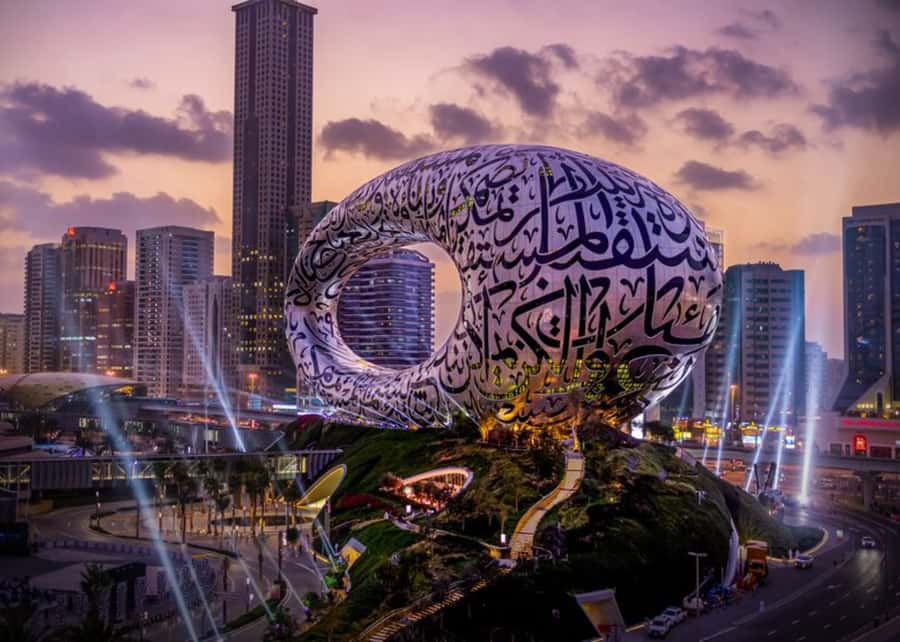
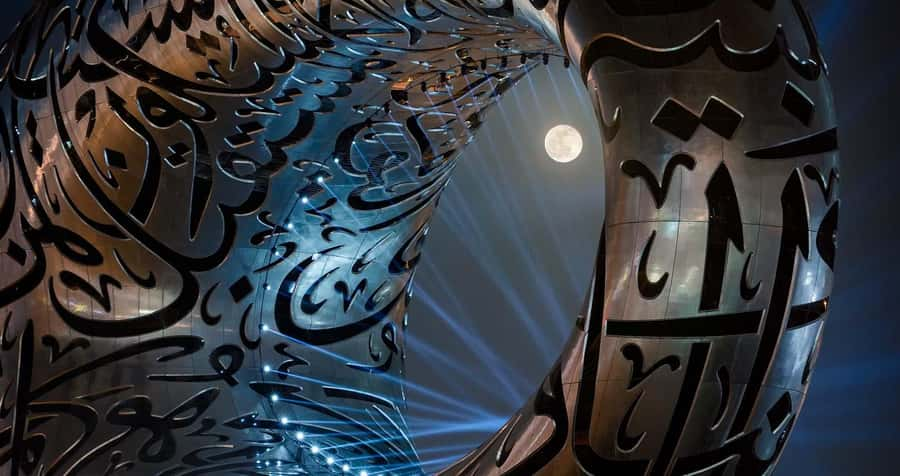
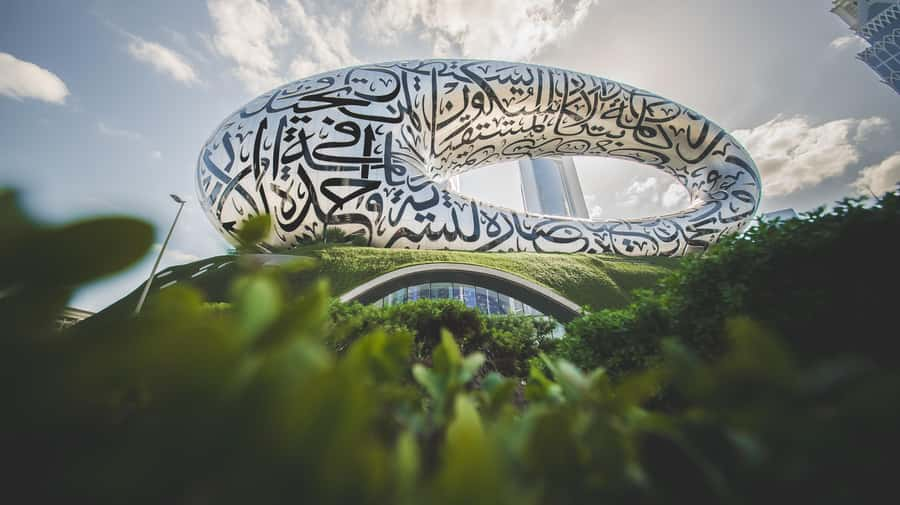
The Museum of the Future is one of Dubai’s most striking buildings. Its enormous silver ring is wrapped in flowing Arabic calligraphy, with parts of the script serving as windows. In daylight, the structure looks polished and precise. After dark, its lighting gives it a strong science-fiction feel.
I would plan a few minutes outside before entering. The architecture is not just a backdrop for a photograph. It sets up the museum’s main idea: this is a place built to suggest what comes next, not to preserve what came before.
That promise can be exciting, but it also shapes your expectations. You are not coming for old objects, traditional galleries, or a chronological account of technology. You are entering a designed experience built around possibilities, hopes, and proposed solutions.
The museum sits in Dubai, and you must arrange your own way there. The venue can be reached by metro, taxi, or car, but transportation is not included with the ticket. Check the exact meeting point on your booking because some ticket types direct you to a counter inside the museum rather than a separate street address.
More Museum Tickets in Dubai
- Dubai: Old Town, Creek, Museums, Souks, & Street Food Tour
★ 4.8 · 10,816 reviews - Museum of the Future Tickets
★ 3.5 · 792 reviews - Museum of Illusions Entry Ticket
★ 4.3 · 778 reviews
The space-station-style opening
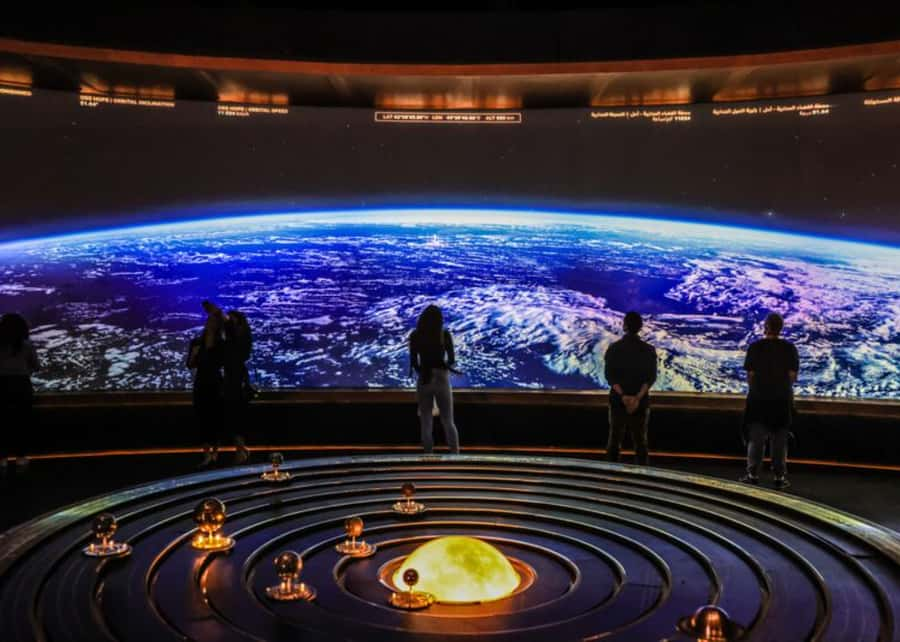
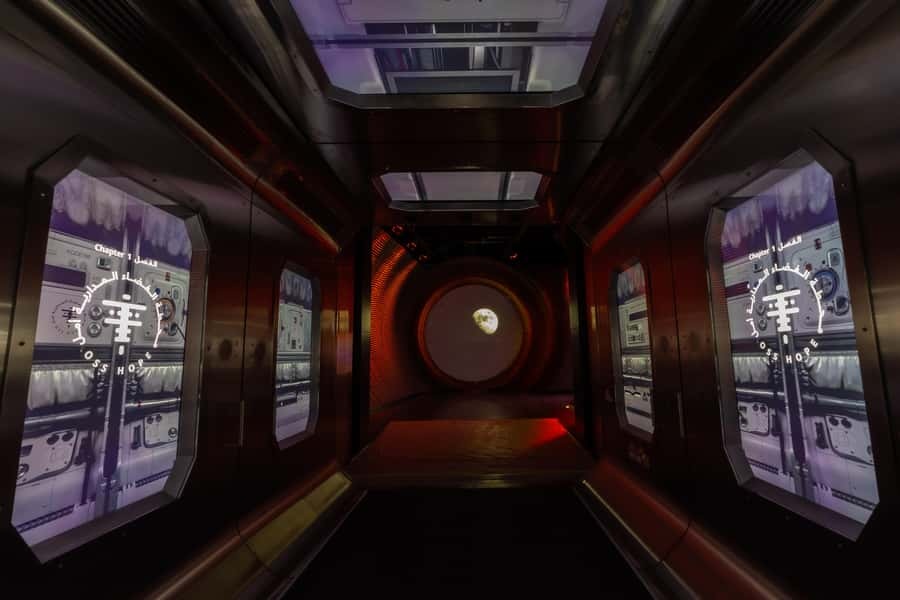
The visit starts with a theatrical trip into the future. The opening sequence gives you the sense of being launched toward a space station, an effective way to shift your attention away from present-day Dubai and toward the museum’s 50-year outlook.
This first section is one of the most praised parts of the experience because it makes the visit feel like a journey. You are not simply walking into a room and reading wall panels. The presentation uses atmosphere and movement to establish the story.
The space theme also gives younger children an easy way into the subject. Even if they do not understand every point about technology or planetary change, they can follow the simple idea of traveling forward in time.
The opening is theatrical, so anyone expecting a conventional science museum may find it unusual. That is part of its appeal, but it also means the museum sometimes asks you to accept a proposed future without offering a full technical explanation.
Space travel and the future of life beyond Earth
Space travel is one of the early themes, and it provides a natural starting point for the museum’s larger questions. You consider how people may travel, live, and work beyond Earth, and how technology could support that future.
The presentation is designed to spark ideas rather than give a detailed engineering lesson. I found that approach useful for a short Dubai visit, particularly if you want a museum that keeps moving and offers a clear visual experience.
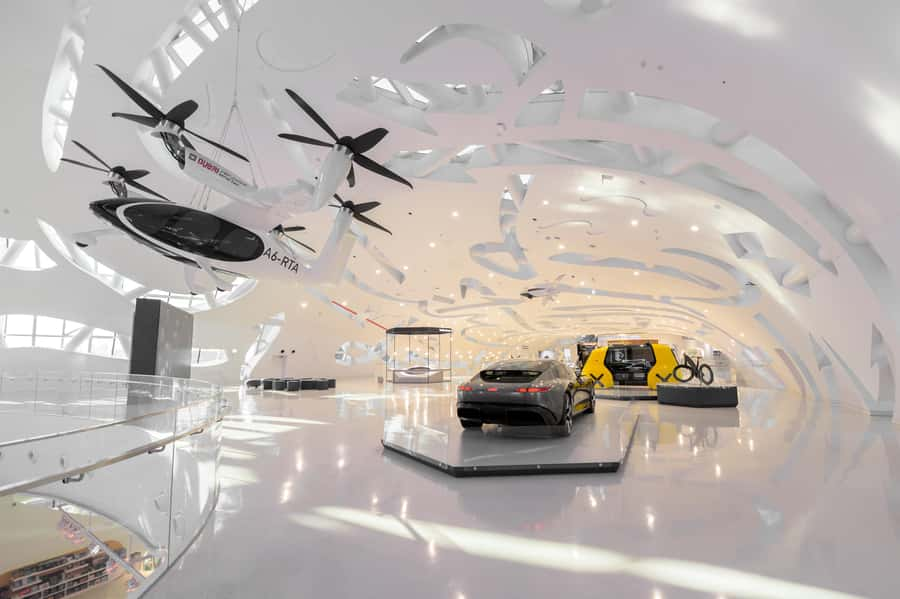
Some sections refer to major future projects and possible advances in transport. The museum also presents ideas connected with aerial travel, including interest in the launch of an aerial taxi in 2026. Treat these concepts as possibilities, not promises. The value here is in seeing the questions being asked and the kinds of solutions being proposed.
If you want hard data, lengthy technical explanations, or a display of working prototypes at every stop, you may find parts of the museum too polished. If you enjoy big ideas presented in an accessible way, the space section makes a strong beginning.
Climate change, energy, and smart cities
The museum turns from outer space to problems much closer to home. Climate change, energy use, education, and smart cities all receive attention. These sections present technology as a tool that might help address current problems.
That positive tone is one of the museum’s defining traits. The exhibits focus on possible solutions instead of simply listing dangers. I appreciate that outlook because it gives you something to think about beyond the usual warnings about climate and urban growth.
The displays also connect several subjects that are often treated separately. A future city needs energy, transport, education, and health systems that work together. The museum encourages you to think about those links.
The limitation is that the future shown here can feel more hopeful than complicated. Real cities face cost, politics, inequality, and public resistance, but the exhibits do not always linger on those obstacles. You should enjoy the visit as a prompt for discussion, not as a complete plan for the decades ahead.
Same area, a completely different kind of day:
- Dubai: Burj Khalifa Levels 124 & 125 Entry Ticket + Options
★ 4.3 · 90,891 reviews - Dubai: Burj Khalifa Sky Level 148, 124, & 125 Entry Ticket
★ 4.6 · 23,827 reviews - Dubai: The View At The Palm Observatory Entry Ticket
★ 4.6 · 22,529 reviews - Dubai: Jetski to Burj Arab-Atlantis w Pic, Video & Icecream
★ 4.9 · 22,260 reviews
Robotics, artificial intelligence, and human augmentation
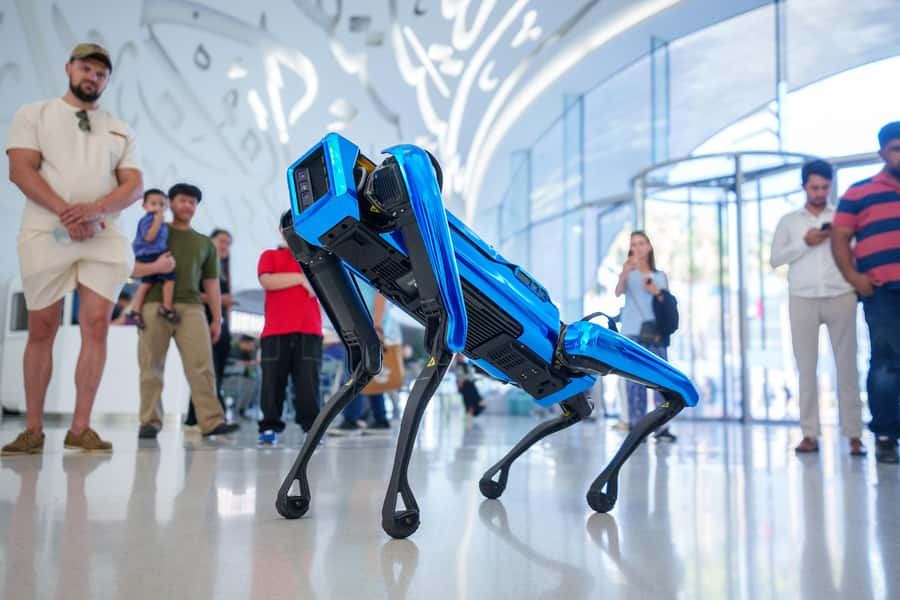
Robotics and artificial intelligence form another major part of the visit. You will see ideas about how machines may change work, education, health, and daily life. Human augmentation is also included, raising questions about how technology might extend physical or mental abilities.
These displays work best when you take time to consider the human side of the subject. The museum is not only asking what machines can do. It is also asking what people may become when technology is built into more areas of life.
The interactive format helps keep the subject from becoming too abstract. You may find practical demonstrations, visual displays, and staff members explaining the purpose of each room. A guide called Baba was singled out for making the experience lively and pleasant, and staff members are generally placed throughout the galleries to help explain the stops.
The subject matter suits older children, teenagers, and adults. Younger children may enjoy the movement and visual effects more than the ideas themselves. Families should expect different members to take different things from the same room.
Health, wellness, spirituality, and the DNA store
Health and wellness broaden the museum’s idea of the future. The exhibits consider how people may care for their bodies and minds, while the spirituality section adds a more reflective note to a technology-focused visit.
One memorable feature is the DNA store, which connects the future of science with the future of human life. It is the sort of stop that rewards a few extra minutes because it asks you to think about identity, biology, and the choices people may make with advanced tools.
A related theme is the cataloging and protection of species. The museum presents thousands of species in a future-focused setting, a detail that gives the climate and health sections a stronger connection to the living world.
These rooms may appeal to you if you like museums that mix science with philosophy. If you prefer a strictly factual medical or natural-history display, the broad treatment may feel light. The museum’s goal is to open possibilities and provoke questions, not to provide a specialist course.
The viewing platform and the building from within

The open viewing platform is a welcome change of pace. After moving through enclosed, highly designed rooms, you step outside for views and a closer look at the building’s structure.
I consider this one of the strongest parts of the ticket because it helps you appreciate the architecture from a new angle. From outside, you see the ring as an object on Dubai’s skyline. From the platform, you understand more clearly how the base and upper structure fit together.
It is also a good place to pause. The museum presents a lot of information in a short period, and the outdoor section gives you room to reset before continuing or leaving.
The platform can become a bottleneck when many people arrive at once. A skip-the-line or premium ticket may help with access to the elevators and viewing areas, depending on the option you select. Check exactly what your chosen ticket covers rather than assuming every premium benefit is identical.
How long the visit takes
The advertised duration is 1.5 hours, which gives you a useful minimum. You can see the principal sections in that time if you keep moving and do not stop at every interactive display.
I would allow closer to two or three hours if your schedule permits. Families may need longer, especially if children want time in the lower area designed for them. Several people have found that the museum offers enough to fill a few hours, while others treat it as a shorter one-time visit.
Your pace will depend on how much you want to read and how crowded the rooms are. A busy day can slow the route, particularly around elevators and popular displays. Arriving when the doors first open is a smart move if you have a standard ticket or want quieter photographs.
The museum is wheelchair accessible. Children up to age four can enter free, but you must visit the counter for age verification. Every child must be accompanied by an adult with a paid ticket, and children must bring a passport or ID card.
Standard admission, skip-the-line, and the $46 price
At $46 per person, the ticket costs enough that you should decide what you value before booking. The price makes more sense if you enjoy architecture, interactive technology, and broad future-focused ideas. It is less convincing if you expect a traditional museum with large collections of historic objects.
Skip-the-line access may be the most practical upgrade. Queues can build at the entrance and elevators, and the museum becomes much harder to enjoy when you are watching the clock in a long line. A late arrival or a tightly planned day makes faster entry particularly useful.
Some premium options include a retail voucher. One option has provided a 50-dirham credit per person for the gift shop, which can help soften the price if you already planned to buy something. I would not choose the ticket only for the voucher, since the shop may not offer much that interests you.
The best value depends on your Dubai schedule. If you have several hours and want a major modern attraction, the ticket can earn its place. If your time is short and you only want an exterior photograph, admission is harder to justify.
Who will enjoy this museum most
I would recommend the Museum of the Future to families with school-age children and teenagers, couples who enjoy design and technology, and anyone curious about Dubai’s plans for innovation. The displays are visual, active, and broad enough to interest people with different tastes.
It can also work well for a mixed-age group. Younger children can enjoy the space-station feeling and the lower activity area, while adults can spend more time with climate, AI, health, and city planning.
You may be less impressed if you want a quiet museum or a detailed record of past inventions. One honest criticism is that the building can be more impressive than some of the interior displays. The exterior is genuinely memorable, while the content inside will depend on how receptive you are to imagined futures.
Staff support adds value. Guides and room attendants help explain the exhibits, and the welcome from the team has been especially helpful for families and older visitors. The experience is easier when you ask questions rather than trying to understand every concept alone.
Practical advice before you go
Book a timed entry and check the exact meeting instructions. The location is obvious, but the correct counter may not be, especially if your voucher gives an address without clearly stating that you must go inside.
Arrive early if you want photographs, smoother movement, or a better chance of avoiding the heaviest queues. If you are running late, skip-the-line access can be worth paying for, but confirm that the option applies to your entry time and the areas you care about.
Do not bring a selfie stick. Unaccompanied minors are not allowed, and all children need an adult with a paid ticket. Keep a child’s passport or ID card available for age verification.
The museum does not provide transport, so build metro, taxi, or driving time into your plan. Also remember that the activity is non-refundable. Check the starting times before you commit.
Should you book the Museum of the Future?
Book it if you want a highly visual, future-focused attraction that combines a remarkable building with ideas about space, AI, climate, health, and smart cities. I especially recommend it to families and first-time Dubai visitors who want something different from malls, towers, and older cultural sites.
Choose skip-the-line access if your day is tightly scheduled or if you dislike queues. The standard ticket may be enough if you can arrive early and have several hours to spare.
I would skip it only if $46 feels too high for a speculative, design-led museum or if you prefer factual collections over imagined possibilities. For most people, the building, space-launch opening, viewing platform, and range of subjects make this a worthwhile one-time Dubai experience, provided you arrive with the right expectations.
FAQ
How much does admission to the Museum of the Future cost?
The listed admission price is $46 per person. Other ticket options may include skip-the-line access or a retail voucher, depending on the option selected.
How long does the Museum of the Future visit take?
The stated duration is 1.5 hours. You may spend longer if you want more time with the interactive displays, viewing platform, and children’s area.
Is skip-the-line entry available?
Yes, skip-the-line entry is available with some ticket options. It may be useful because queues can form at the entrance and elevators.
What subjects are covered inside the museum?
The museum covers space travel, climate change, health, wellness, spirituality, robotics, artificial intelligence, human augmentation, education, smart cities, energy, and transportation.
Is the Museum of the Future suitable for children?
Yes. Children can enjoy the space-themed opening and the area at the bottom designed for children to explore. Children up to age four can enter free after age verification.
Do children need identification?
Yes. Children should bring a passport or ID card for age verification. All children must be accompanied by an adult with a paid ticket.
Is the museum wheelchair accessible?
Yes, the Museum of the Future is wheelchair accessible.
How can you get to the museum?
The museum does not provide transportation. You can reach it by metro, taxi, or car.
Can you cancel the ticket?
No. This activity is non-refundable, so check the date and starting time before booking.
Just added around Dubai
- Can am Maverick X3 Rs Turbo★ 5.0 · 35 reviews
- Miracle Garden Admission Tickets with Transfer Options★ 5.0 · 12 reviews
- Deira Creek: Dhow Cruise Dinner★ 3.5 · 15 reviews
- Private Half-Day Tour in Dubai Miracle Garden and Global Village★ 5.0 · 21 reviews
- DXB Private Half-Day Dubai City Tour: Iconic Sights & Landmarks★ 5.0 · 34 reviews
- Dubai Nighttime City Tour with Airport or Hotel Transfer.★ 5.0 · 9 reviews
- Tickets for the DXB Boat Party at Sunset in Dubai★ 5.0 · 50 reviews
- Dubai Canal Dinner Cruise with La Perle Show Tickets Combo★ 4.5 · 56 reviews
Museums, compared.
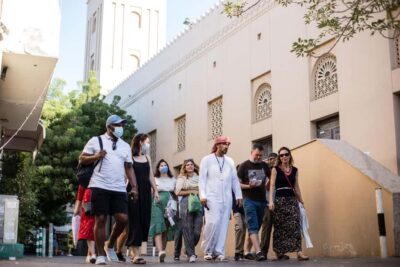
Old Town, Creek, Museums, Souks, & Street Food Tour
Our verdict on this one →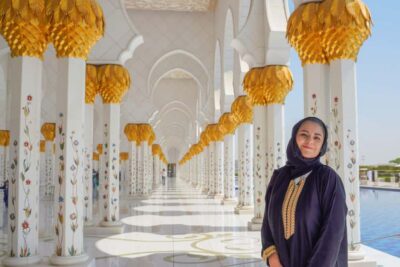
Abu Dhabi Grand Mosque & Louvre Museum Full-Day
Our verdict on this one →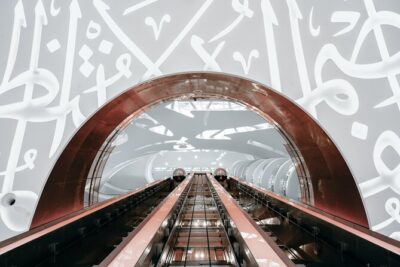


Abu Dhabi Day Tour with Grand Mosque & Louvre Museum
Our verdict on this one →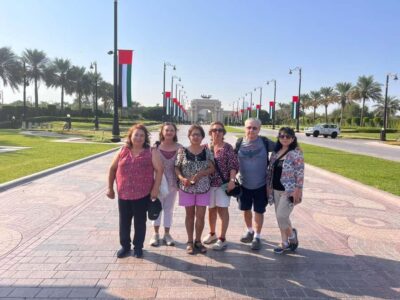
Future Museum, Burj Al Arab, and Dubai Frame Tour
Our verdict on this one →
3D World Trick-Art Selfie Museum Entrance
Our verdict on this one →
Burj Al Arab, Future Museum, Dubai Frame Tour
Our verdict on this one →Browse the lists this tour appears in